HomeSite MapContact Us
new arrivals special offers my account shopping cart checkout faq product reviews testimonials
e-mail:
password:
 
Password forgotten? Click here.
 + Celebrities (13)
 + Chinese Hanfu (25)
 + Wedding Wear (79)
 + Women's Wear (281)
 + Men's Wear (86)
    - Cheongsam | Gowns (M) (12)
    - Chinese Hanfu (M) (14)
    - Jackets (M) (15)
    - Pants (M) (5)
    - Shirts (M) (21)
    - Suits (M) (11)
    - Vests (M) (4)
    - Zhongshan | Mao Suits (M) (2)
 + Men's Footwears (M) (4)
 + Kung Fu Supplies (24)
 + Gift Vouchers (4)
New Arrivals
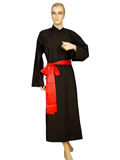
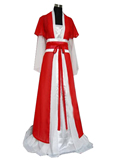
Women's Long Satin Hanfu with Outer Coat
WHF-A006-ST This item is subject to 5% discount!
Women's Long Satin Hanfu with Outer Coat

US$195.99
US$156.80
20% OFF

../More
Specials
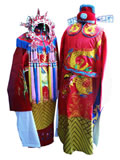
Tang Dynasty Wedding Dresses with Hat for Couples
CXF-X004 This item is subject to 15% discount!This item is subject to 15% discount!This item is subject to 15% discount!
Tang Dynasty Wedding Dresses with Hat for Couples

US$399.99
US$320.00
20% OFF

../More
ORDER DISCOUNT
 USD$100+ 5%
 USD$200+USD$200+ 10%
 USD$300+USD$300+USD$300+ 15%
Product Guide
PayPal-eBay's service to make fast, easy, and secure payments for your eBay purchases!

WorldPay

Visa Delta Visa Master AMEX


Chinese Clothing, Asian Dress and Hanfu

Kung Fu Clothing and Shoes, Tai Chi and Wing Chun Uniforms, Shaolin Outfits, Wudang Taoist Robes, Wushu Costumes, Martial Arts DVD

www.ChineseKungFuHustle.com

Kung Fu Clothing and Shoes, Tai Chi and Wing Chun Uniforms, Shaolin Outfits, Wudang Taoist Robes, Wushu Costumes, Martial Arts DVD

Korean Hanbok for Men

INTRODUCTION TO KOREAN HANBOK
Hanbok is the traditional Korean dress. It is characterized by vibrant colors and simple lines without pockets.

Some of the basic elements of today's hanbok, namely the shirt (jeogori) and pants (baji), were probably worn at a very early date, but it was not until the Three Kingdoms period (57 BC - AD 668) that the two-piece costume of today began to evolve. Short, tight trousers and tight, waist-length jackets were worn by both men and women during the early part of the period, as evidenced by ancient tomb paintings.

Toward the end of the Three Kingdoms period, Tang China introduced Koreans to silk robes which were adopted for wear by royalty and officials. Noblewomen began to wear full-length skirts and wide-sleeved, hip-length jackets belted at the waist and noblemen began to wear roomy trousers bound in at the ankles and a narrow, tunic-style jacket cuffed at the wrists and belted at the waist.

Following the Mongol invasions of Korea during the Goryeo Dynasty (918 - 1392), Korea was a vassal state of the Mongolian Yuan Dynasty for about 80 years. King Chungnyol of Goryeo (r. 1274-1308), took as his wife a princess from the court of Kublai Khan and began dressing in the Mongol fashion. It is said that within three years of his ascendance to the throne, every official in the Goryeo court had shaved his head except for a patch of hair in the middle and had adopted the dress of the Mongolian plains people.
  During the short time Goryeo was a Mongol vassal, three kings were born to Korean-Mongolian queens, which had quite an effect on the social and fashion trends of the times. The skirt chima was shortened as was the shirt jeogori, which was hiked up above the waist and tied at the chest with a long, wide ribbon instead of belted and the sleeves were curved slightly.

The upper classes wore hanbok of closely woven ramie cloth or other high-grade lightweight materials in warm weather and of plain and patterned silks the rest of the year. Commoners were restricted by law as well as resources to cotton at best. The upper classes wore a variety of colors, though bright colors were generally worn by children and young girls and subdued colors by middle-aged men and women. Commoners were restricted by law to everyday clothes of white but for special occasions they wore dull shades of pale pink, light green, gray and charcoal. Formally, when Korean men go outdoors, they're required to wear overcoat known as durumagi which comes down to knee-length.

Hanbok are classified according to their purposes: everyday dress, ceremonial dress and special dress. Ceremonial dresses are worn on formal occasions, including a child's first birthday, a wedding or a funeral. Special dresses are made for shamans and officials.
WOMEN'S HANBOK

Displaying 1 to 1 (of 1 products) Result Pages:  1 
Model Name Price
[MHB-X001] Korean Men's HanbokMHB-X001 This item is subject to 5% discount!
Korean Men's Hanbok
- Rayon
- Blue, Maroon
- M
US$129.99
Displaying 1 to 1 (of 1 products) Result Pages:  1 
Time of Hong Kong: Thursday, September 9, 2010 10:02 pm (GMT+8)